

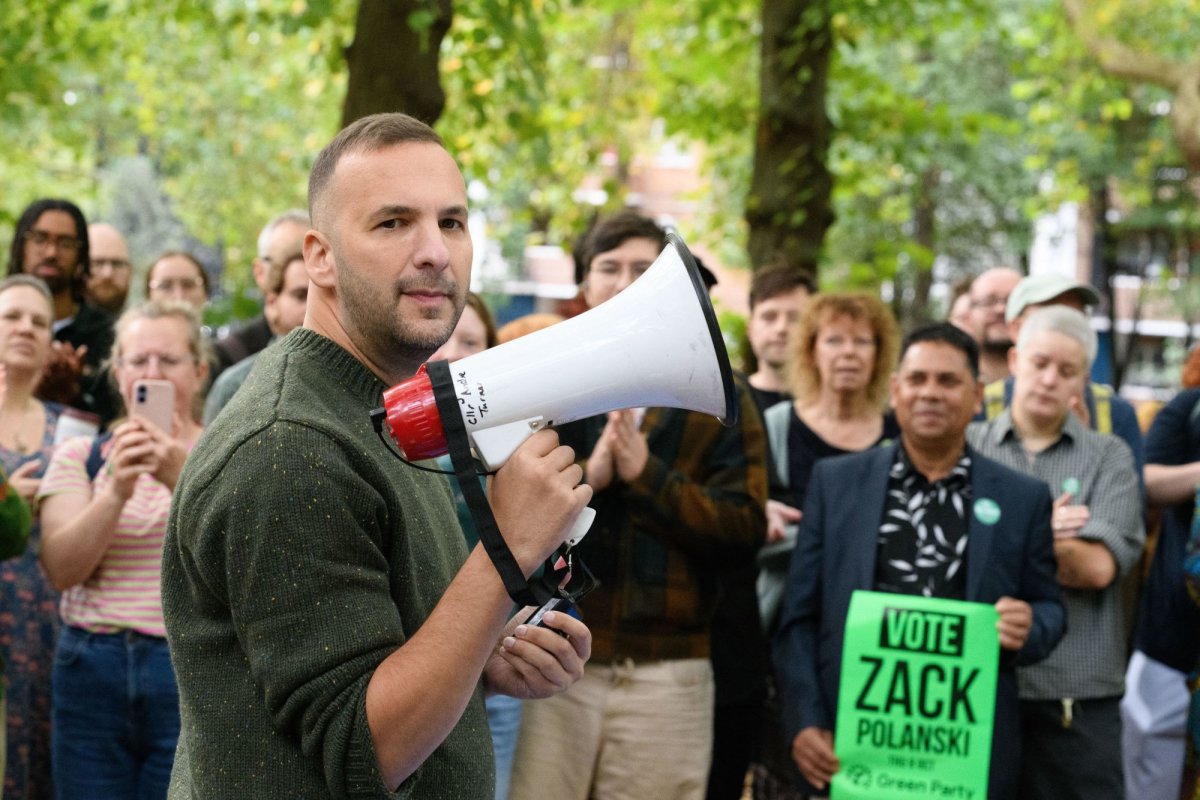
Green Party leader Zack Polanski with supporters in Holborn and St Pancras, 20 September 2026 (Ron Fassbender/Alamy Live News)

9 min read1 hr
Zack Polanski reshaped the Greens into a populist left party, which worked well against Keir Starmer. Andy Burnham is now threatening to take that argument away. Sienna Rodgers reports
The Green Party has a problem: it may be a victim of its own success. In raising the salience of issues like Gaza and pushing radical cost of living policies, while getting cut-through thanks to a sharp social media strategy and the ability to speak human, Zack Polanski may have done himself a serious disservice.
Among Greens, there is a widespread view that the governing party would never have made the bold move of ousting its leader just two years after a landslide victory without pressure from the left.
Perhaps, then, Polanski did too well too early. Now there’s a new Labour leader who can communicate in an engaging – even deeply moving – way, while moving leftwards, all from No 10 and unhindered by the ceiling that inevitably comes with heading a minor party.
Of course, there is another way of looking at it: that supporting the Green Party can have such a dramatic impact is proof, for many of its activists, that it is worth doing.
“Keir Starmer was the most unpopular prime minister in British history, but it took people voting Green in their thousands in May to force him out,” says Southwark council leader James McAsh. He was a Labour councillor until his well-timed defection to the Greens in February, a few months before a historic Green-Lib Dem coalition was established in the borough.
For him and others, the local elections proved that voting Green is a sure way for the left to effect real change. But under first-past-the-post, which makes tactical voting essential for many, does Labour only need a more palatable figurehead and message to win back those voters who were so dissatisfied with Sir Keir Starmer that they backed a left-wing alternative?
Recent polling suggests Andy Burnham may be doing just enough to unite the progressive vote, at a time when support on the right is fragmented between the Conservatives, Reform UK and Restore Britain.
A survey by More in Common last month showed Labour retaining 52 of its 59 MPs in London, while the Greens would fail to win any, according to the projection. Until June, the Greens were reliably in double figures in national polling, even reaching highs of 21 per cent, whereas they have now fallen back to hovering between seven and 12 per cent.
From the Greens comes a simple answer to such doubts: just wait.
“A lot of these noises sound positive but we don’t know the substance behind them,” McAsh says of Burnham, citing the upcoming Budget and new drilling of oil and gas. “The general view of the people who switched to the Greens from Labour in Southwark is that Burnham is a step forward from Keir Starmer but that’s a low bar and people want to see much more.”
Labour-Green switchers want to see rent controls, climate policies and further action following Ed Miliband’s “positive initial steps” on Israel-Palestine, he says.
Green peer and former party leader Natalie Bennett agrees. While voters on the left would like the Burnham government to succeed, “there’s already a significant degree of disillusion”.
We’ve seen “hopeful noises on a whole range of areas”, Baroness Bennett says, adding: “We really haven’t actually seen anything delivered, and many things have been backed away from, like, for example, council tax.”
The messaging for the Greens is obvious: “For us, the simple thing to say is, ‘What sort of Andy Burnham do you want? The stronger the Greens are, the more he’s going to be pressured to be the kind of PM that you actually want.’”
But haven’t the Greens dialled down their ambition? Under Starmer, they talked of replacing Labour as the party of the left. Now that Burnham has arrived, they aspire merely to influence Labour’s direction.
“The country is hanging on somewhat by its fingernails to the hope. That’s where we are at this moment,” Bennett replies. “But one month, two months, three months? We would hope that we would see some real delivery from Burnham on things like oil and gas drilling; even the absolute basics – some real action on ensuring genuinely affordable rent for people.
“If we don’t see those things, I have absolutely not in any way given up on the Greens replacing the Labour Party as the party that genuinely delivers hope and real change.”
Privately, there are Green insiders and members who are willing to admit that Burnham has reshaped the dynamics for their party: he speaks a language that appeals to those Starmer had alienated, and this has been reflected in polls. There has been some feedback on the doorstep, too, that switchers have become less certain of their support for the Greens and want to give the new PM a chance.
Internally, the Green Party is grappling with how far it is possible to get credit for pulling Labour leftwards. In the meantime, it plans to push Labour on vulnerable areas: North Sea oil, wealth taxes, rent controls, Thames Water and public ownership of key industries more broadly. Eye-catching policies along these lines are expected in the conference speeches of Polanski and deputy leader Rachel Millward.
The party reckons its narrative of Burnham merely “tinkering” is cutting through to the voters who matter most. While Miliband’s announcement of sanctions on West Bank settlements has reduced some of the anger around Gaza, Green insiders report that informed left-wing voters still have concerns around UK surveillance flights over Gaza as well as the government’s refusal to use the word “genocide”. Meanwhile, John Healey and Wes Streeting are seen, from a Green perspective, as weak points in the Cabinet.
At first, the “continuity Starmer” line was not working so well, insiders say, but now the narrative is moving towards the Budget and tricky Treasury decisions – defence spending and welfare cuts – the story can shift from “We want to give Burnham a chance” to “But is he going to deliver?” The new Chancellor’s market-reassuring interviews, in which he sounds increasingly like Rachel Reeves, are offering particular encouragement for the Greens.
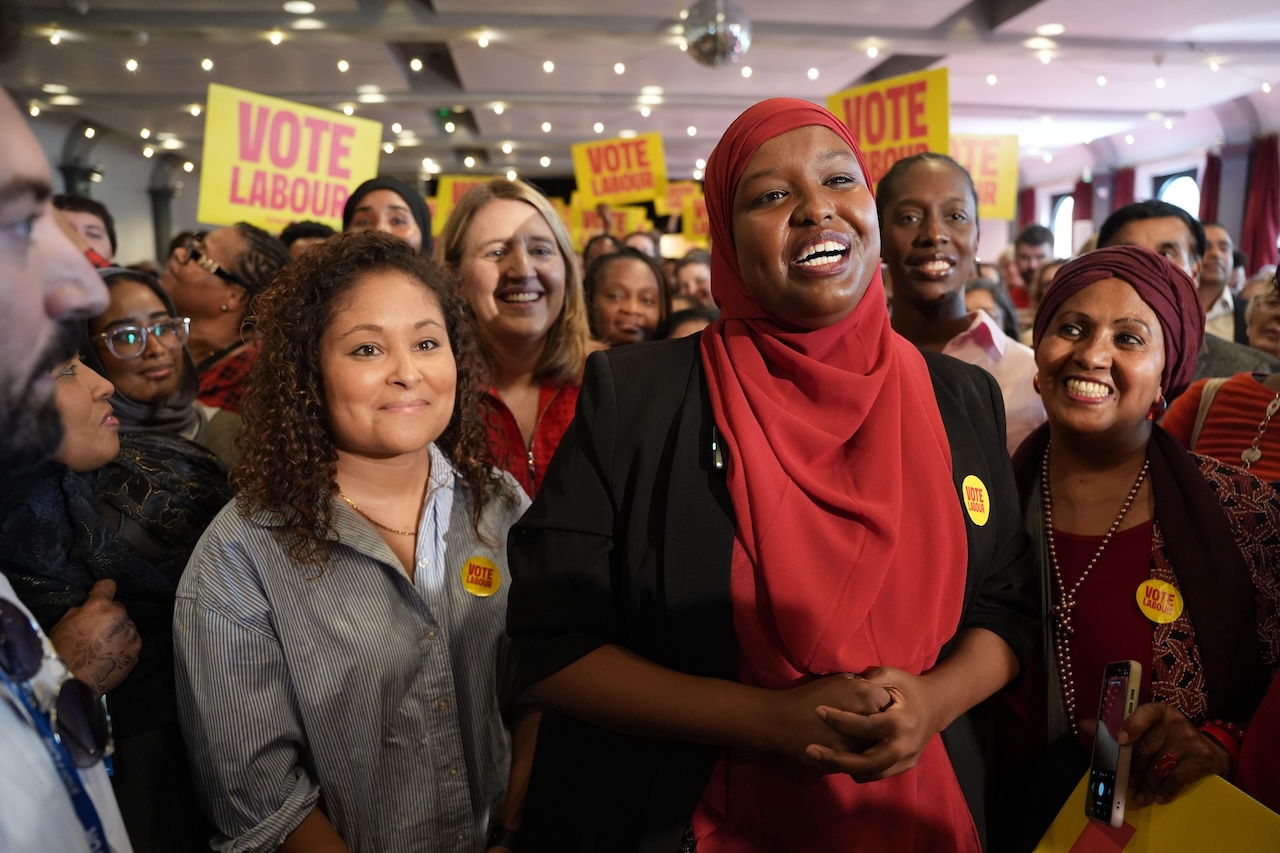
A crunch point is coming: the Holborn and St Pancras by-election, in which Polanski has taken a significant risk in standing as the Green candidate himself.
Labour sources are confident of holding onto Starmer’s former seat. They say their candidate Sagal Abdi-Wali – currently the leader of Camden council – is well-liked, and that targeted online ads as well as her face on vans going around the constituency have been effective in raising her profile. Burnham’s emotional Labour conference speech – which, while not going as far as the Greens would, announced moves on public ownership of water, electoral reform and possibly even rejoining the EU – only raised their hopes further.
The Greens are doing little expectation management, however, instead emphasising that – although they are very much “the underdogs” – the constituency is completely winnable. The Burnham bounce is wearing thin, say party sources, and locals have many complaints about the council that the Labour candidate leads.
They admit a Green win would be a huge upset, though, considering it is a former PM’s seat in a solid Labour area and one that has never been held by another party. Some acknowledge, too, that unlike in neighbouring Haringey, for example, the Greens did well in the local elections in Camden – including ousting the then-leader from his own seat – but the party did not come near taking control.
So, will their optimism here turn out as with Gorton and Denton, the pre-Burnham by-election that Hannah Spencer won decisively, pushing Labour into third place, or as with the Greater Manchester mayoral contest, which saw the Greens come a very distant third despite hopeful briefings?
“I’ve been knocking on doors in Holborn and St Pancras, and quite a lot of people know and have really noticed that Labour put off the Rosebank and Jackdaw decisions until after the election,” says Bennett.
“People really don’t like that. Whatever your view is about that, ‘We’re going to do something, but we’re going to make you vote before we tell you what we’re going to do’ is really not a good look.”
The message being put across on the doorstep is, she says, “this is just a Labour person who’s just going to vote according to the whip, and they’re not really going to speak up for you”. In a general election scenario, the party intends to use the same approach.
The Greens say their data is showing that the fight in north London is on a knife-edge. They are getting record activist turnout, with more than 200 campaigning in the seat each day over the last weekend of September, and party conference in Brighton is being used as an opportunity to mobilise further – expect politicians with many members in tow to travel up for more canvassing.
The biggest chunk of voters identified by the Greens in the Holborn constituency is known in the party as “L3s”: previous Labour voters who currently sit between ‘1’ (reliable supporters) and ‘5’ (those who would never vote for the party). And they, according to the Greens, are swinging in the right direction.
Looking ahead to a general election scenario, one insider warns against paying any attention to MRP (Multilevel Regression with Post-stratification) polling as it fails to take into account the efficient targeting of resources a party like the Greens always undertakes.
“When we come to the next general election, whenever it might be, we’re going to see 650 individual fights up and down the country. It’s going to be really localised, and people are going to be really looking at who’s their candidate and how will that person behave in Parliament,” says Bennett.
Put to her that there is a paradox – the more successful the Greens are in shaping Labour, the less a vote for the Greens is needed – she dismisses the idea: “If you can see there’s the possibility of that direction of travel, do you want the pale imitation or do you want the real thing?”