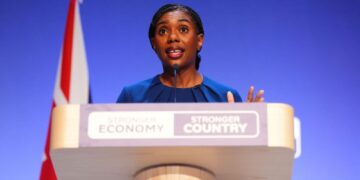


Prime Minister Andy Burnham has outlined a range of areas he would like to see greater spending in. (Alamy)

4 min read04 August
Andy Burnham has set out some major ambitions for government since entering office. Experts look at how he could pay for them.
The new Prime Minister was keen to hit the ground running when he succeeded Keir Starmer in No 10 last month, promising quick action to help people cope with cost-of-living pressures. He announced that he would take VAT off electricity bills, cap bus fares at £2, and reduce business rates for pubs and restaurants.
When it comes to longer-term policy, Burnham has promised to end rough sleeping and reform adult social care. His vision for the latter, bringing it more in line with NHS provision, is estimated to cost billions of pounds of additional spending every year. The new PM is also under pressure to increase defence spending in response to global security threats.
At the same time, the PM has pledged to stick to the government’s fiscal rules and 2024 manifesto pledges not to raise income tax, national insurance and VAT.
This has raised questions about how Burnham will fund his plans for government.
Many details will not be confirmed until Wednesday, 28 October, when Chancellor John Healey delivers the first Budget of the Burnham Labour government. Healey, who resigned as defence secretary during the final weeks of the Starmer government over defence spending, has said that the Autumn Budget will be “built on fiscal discipline”.
What are Burnham’s options?
Carsten Jung, leader of the economy team at the Institute for Public Policy Research think tank (IPPR), argued that Burnham and Healey have inherited a better economic picture than Starmer and former chancellor Rachel Reeves faced.
“Rachel Reeves, for all of her strategic mistakes, really fixed the public finances,” said Jung.
“What she inherited from Jeremy Hunt [her Tory chancellor predecessor] was unsustainable. It was based on cuts to departmental spending which weren’t sustainable. So she went to the painful exercise of increasing taxes to fix that.
“What Andy Burnham inherits is a much better funded state, and he also has headroom against the fiscal rules he inherited, which makes it less dire.”
However, he said that borrowing money to fund government spending could be riskier for Burnham than it was for Starmer due to “jittery” markets and a more precarious global picture. The Bank of England recently warned that it may be forced to raise interest rates later this year if the US war with Iran escalates, which in turn would make borrowing more expensive.
Jung said that one option available to the government is to increase tax on wealth to bring it closer to tax on earnings, highlighting capital gains tax.
As things stand, people are charged either 18 per cent or 24 per cent on profit they make when selling, gifting or disposing of an asset that has increased in value, such as a second home. Burnham could increase Treasury revenues by aligning capital gains tax rates with income tax bands of 20, 40 and 45 per cent.
Elsewhere, examples of pro-growth policies according to Jung include the Treasury investing more in “leading industries” in the UK as well as “boosting entrepreneurship” while closing tax loopholes.
Isabel Stockton, researcher at the Institute for Fiscal Studies (IFS), said Burnham’s ambitions can be split into two categories: those that are less fiscally challenging, such as the cost-of-living measures he announced in his first few days in office, and policies with greater economic implications, like defence spending and adult social care.
Stockton agreed with Jung that borrowing more money would be “difficult” and “risky” for Burnham as it could push the new government close to breaching its fiscal rules, leaving him with two broad options: raising tax and cutting spending elsewhere.
Burnham has already said that the country must get “really serious” about reducing welfare spending to fund priorities like greater defence spending.
Stockton also suggested that the Labour government explore using the National Wealth Fund as a way of boosting spending power – it was launched under Starmer in 2024 to “mobilise billions of pounds of investment” in UK “clean energy and growth industries”.
By the end of the current parliament, the NWF should be on track to have capitalised with almost £30bn – with government funds directed to “resources to finance economic activity that supports additional private investment”, opening up investment options for the government.
However, NWF is still funded by taxation and borrowing, and is run by the Treasury – meaning the challenges around scrutiny on tax and spend remain.
Stockton told PoliticsHome the limitations Starmer’s government faced on taxation, spending, and spending cuts continue to exist, and remain challenging for Burnham’s government.
“With any new government, it can make different choices, but it is going to be facing essentially the same constraints, especially given that he [Burnham] says he’s committed to the existing fiscal rules,” said Stockton.
“He says he’s committed to the Labour manifesto on tax, so that rules out quite a few things already. That means that the decisions are going to be difficult.”