
(Tom Pilston)

12 min read34 min
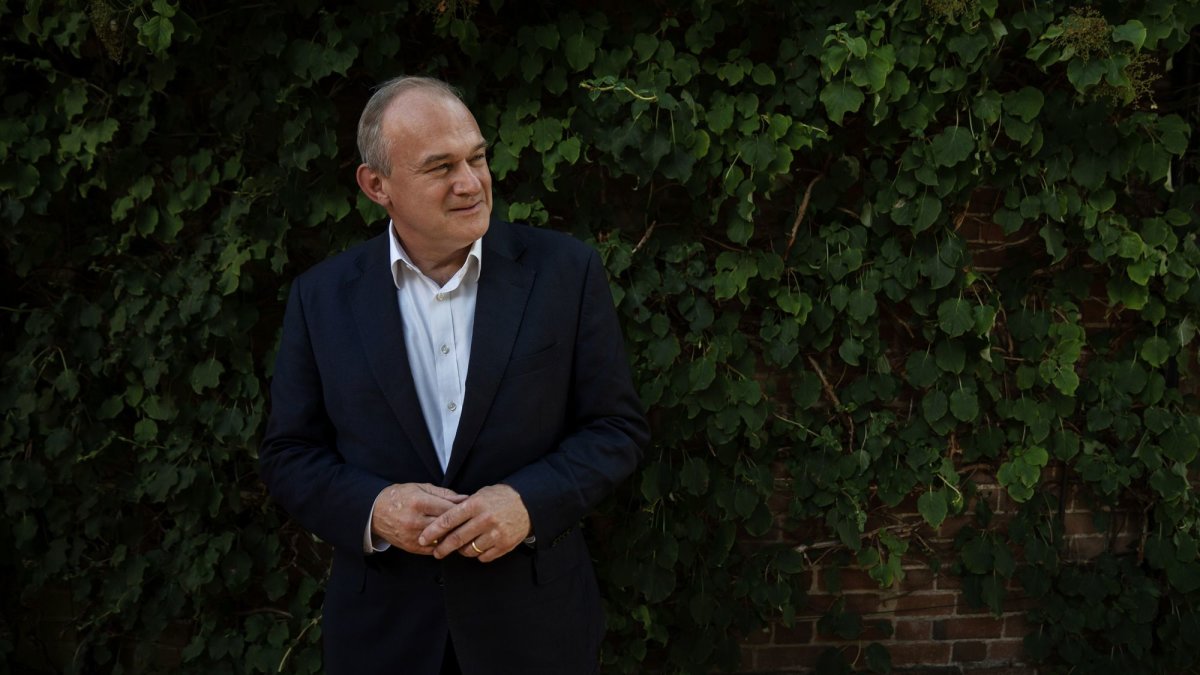
Ed Davey thinks his party is better placed than ever before to exploit Britain’s fractured politics. The Lib Dem leader tells Zoe Crowther his party is ready for power
Ed Davey listens to BBC Radio 2, doesn’t subscribe to any music or streaming service, and CDs still line the shelves with tiles like Music for Lovers, a medley of classical versions of romantic ballads.
“I’m so old-fashioned, aren’t I?” he asks. It is, clearly, a rhetorical question.
David Cameron once taunted Gordon Brown that he was an analogue politician in a digital age. But their contemporary, 60-year-old Davey, has outlasted both at the frontline and leads a party at its electoral zenith, so might be entitled to say modernity is an overrated virtue.
And yet the Liberal Democrat leader meets The House in his Surbiton home at the end of a summer of, if not discontent, then rumbling unease. Some of his MPs fret that the party, lacking a national identity, risks being marooned by changing tides.
A senior Lib Dem MP complains of “a frustration” in the party that “it feels like we’ve been talking about the same things – social care and rivers – and that just felt like we weren’t really moving forward”.
Davey’s response might be described as akin to the warm embrace of an affable python. When criticisms from his own MPs and activists are put to him, his reply is consistent: he smiles, nods, and says he agrees with them.
What does he say to critics who think the party could take a stronger line on being an anti-racist party? “I strongly agree with them – I want to lead on it!”
What does he think of some of his MPs and activists saying the party must communicate better and do more to win northern and urban seats? “I strongly agree with that. The strategy debate is one that I welcome and embrace being part of. And indeed, growing in the North is something I’m extremely keen on.”
It would be a mistake to think, however, that Davey is for turning. One small but telling example is of a recent meeting at which some Lib Dem MPs thought that he had agreed to stop the ‘stunts’.
The series of photo-opportunities in which Davey sent himself up won coverage during the general election, but many fear they have run their course and risk merely highlighting the vacuity of the party’s policy offer.
Asked about them, however, it becomes clear that there has been a misunderstanding. Davey intends to continue with the stunts – or, as he prefers to dub them, ‘visuals’ – including at the party’s upcoming autumn conference, but merely agrees that they should be more effectively tied to a policy “purpose”.
“I don’t think we’d have as many MPs, frankly, as we do if we hadn’t done the visuals that we did last election… So, we’ll continue to do the visuals.”
As for the local elections, where some see stagnation, he sees progress. He insists the results showed his party is “coming back in areas that I thought we wouldn’t come back in”, for example winning overall control of Southport council, securing the first Lib Dem leader of Birmingham city council in a coalition with the Green Party, becoming the biggest party on Newcastle council, and making gains in the London borough of Ealing.
“The message I took from the local elections was that not only were we consolidating where we were in the general election, but we were expanding,” Davey says.
With the two-party system under strain, more seats are being won on a smaller percentage of the vote and, according to Davey, “the prize goes to those parties who are well-organised, can get their ground game out, can get their votes out”.
Lib Dem MP for Harrogate and Knaresborough Tom Gordon is less sanguine; he has argued that the Lib Dems failing to make sweeping gains across the country was a “warning sign” that the party has been operating in “a very cautious way” so far.
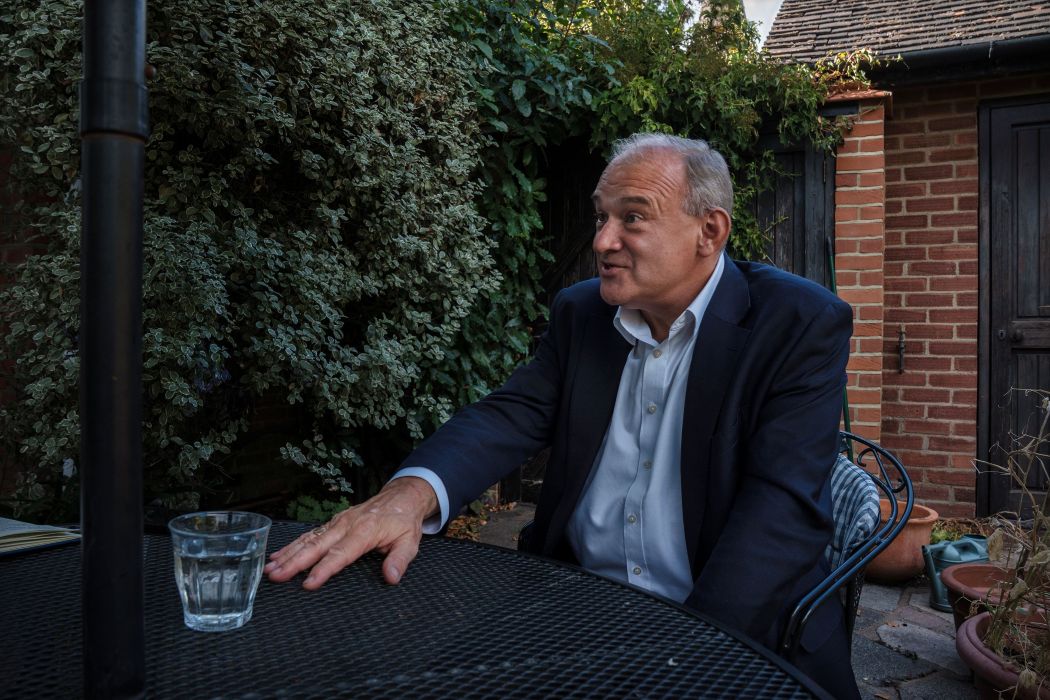
The Lib Dem leader, speaking from the garden of his large family home in south-west London, does not appear to be rattled but instead radiates domestic content.
Laundry hangs from the line; his 12-year-old daughter’s cello leans haphazardly on an old green sofa. A cushion cover reads, “We stay together for the sake of the cat.”
Davey insists that his party is the “most united party in Westminster” and praises critics like Gordon, unprompted: “You build up grassroots, you build that trust, and whether it’s what Tom Gordon’s done in Harrogate, what our colleagues have done in Hull, our colleagues have done in Sheffield, I can see that community politics delivering in quite significant parts of the North.”
Gordon has also been asked by Davey to chair a review of the party’s electoral strategy in the North of England, where the party has only four MPs but hopes to grow further and add to its 2024 record of 72 seats.
“We need to ensure that we’re covering issues that matter, and I would point to issues like transport in the North,” Davey says.
“When I talk to my colleagues, whether it’s in Manchester or Liverpool or Sheffield or Hull or Leeds, they say that the thing we have lacked and people have talked about but never delivered is a proper transport strategy, which means that people can get around.
“If you go back to George Osborne, who talked about this, he didn’t deliver on it. Boris Johnson talked about it, didn’t deliver on it, and they haven’t really grasped that. We need to show that we have thought through that and that will be really, really important.”
Lib Dem MP and party president Josh Babarinde has been leading consultations with members that will result in a once-in-a-parliament strategy review at the party conference in September. Babarinde said a new strategy was needed “to meet this new moment” of rising populism on the left and right.
Babarinde has warned, however, that the review must not stray into areas which are the leader’s purview – a message aimed at ensuring it does not turn into a public, damaging attack on Davey.
The leader believes the Lib Dems are in their “strongest position in over a century” and wants to turn his party’s gaze not inwards but towards the opportunities opening up for it – and the value of having an experienced leader at the helm.
Davey is often asked what exactly the Lib Dems are for in this new era of multi-party politics, with the Greens squeezing Labour to the left and Reform UK outperforming the Tories in the polls on the right. His answer is that the Lib Dems are there to stop Reform getting into government, either by itself or in a right-wing coalition with the Conservatives.
“If we do really well, as I think we will do against the Tories and Reform, that stops a Reform government and it stops a Tory-Reform government, and it makes the chances of a hung parliament extremely likely.
“The chances of a hung parliament are larger than I have known… and in that I’d be the most experienced leader. I’ve been around a little while, I’ve been in government, I’ve been a junior minister, I’ve been a Cabinet minister, seen those types of upfront discussions in a balanced parliament, and I’d be the most experienced party leader, and so for me, that’s quite exciting.”
Davey shrugs off a question about whether he thinks being too associated with the previous Coalition government would do more harm than good, insisting that public opinion of the Coalition years might be “changing”.
He refuses to draw any red lines on what the Lib Dems might compromise on to enter a coalition with Labour or any other party.
Despite his insistence that he wants to expand the party’s northern reach, he admits most of his targets are Tory-facing seats.
“I can’t deny the facts; that the vast bulk of seats that we can take at the next election are off the Conservatives, and if we don’t take them, Reform will take them,” he explains.
“If you look at all the projections that I see, we are likely to more than hold our own, and I think we’re being underestimated.
“That Tory-Reform axis is truly frightening, and we need to show that there’s a party that is true to British values – whether it’s on the economy, whether it’s on defence – who will defend those British values and can win.”
“That Tory-Reform axis is truly frightening”
Reflecting on where his party has had the most cut through with voters during his time as leader, Davey reckons it has been for appearing the most anti-Trump.
“We’ve been the ones leading that by a country mile,” he says, accusing other political leaders of “appeasing” the US President.
Davey also wants the Lib Dems to lead on being an anti-racist party, describing the level of racial hatred in the UK as “disgusting and depressing”. “We just have to call people out more,” he says.
He accuses Reform UK activists of racially harassing a friend, a young British woman living in the South East of England with a family background in India, claiming they told the woman they would take her passport and revoke her citizenship when they got to power.
“When people are coming to people’s doors and saying that outright, that is disgusting, and I never thought we’d get to that position,” he says.
“But we have a political party whose activists are doing that and they have to be beaten, and they have to be challenged. Certainly, the moral responsibility I’ve talked about beating Reform is about beating that racist element that we’re seeing in our politics.”
In response, a Reform spokesperson said: “Ed Davey should either name the activists involved, provide evidence of this alleged incident or withdraw this baseless claim.
“Reform has never proposed seizing passports or revoking the citizenship of British citizens. This smear is the last refuge of a party with absolutely nothing to say and whose leader is flatlining in the polls.”
At this year’s conference, taxation will be firmly on Davey’s agenda, alongside his existing top priorities of health and social care, EU relations and electoral reform.
“I don’t think you can tackle the cost of living crisis unless you address the fact that we are so overtaxed in our country now,” Davey says. “If you can’t come through with a credible policy to help people, I think you’re not answering the core requirement of government. You are going to have to look at that.”
The Lib Dem leader would not be drawn on which specific tax policies will be announced at conference.
Speaking to The House in 2024 following the general election, Davey said he wanted the NHS to be more like the Danish health system, with better health outcomes and higher patient satisfaction.
Denmark places a higher tax burden on its citizens than the UK government does, however. According to the OECD, an average single worker faces a ‘labour tax wedge’ of approximately 36 per cent in Denmark compared with around 29 per cent in the UK.
Davey insists that there is “a whole series of really practical ways you can start reforming the care system that aren’t going to cost the earth” and would, “over a relatively short period”, start saving money in the NHS. The Lib Dems’ proposals include integrating health and social care to reduce delayed discharges and hospital pressures and expand community care, all while taxing banks more heavily, closing tax avoidance loopholes and reforming taxes on wealth and capital rather than increasing taxes on ordinary earnings. However, this plan would still require significant initial investment in social care.
“I start by saying we need to grow the economy. And while I’m sure every political party will say that, the challenge to political parties is, ‘What’s your plan?’” Davey says.
“I see no plan from Labour, and Burnham has not talked about growth, as far as I can see, other than suggesting that a whole set of new mayors would somehow magically deliver growth. I don’t think they would.”
The leader insists the Lib Dems are the “only party with a growth strategy” for the whole country and refers to new Prime Minister Andy Burnham as “Avanti Andy”.
“He talks about London and Manchester. What about all the other areas we need to grow? The rural areas, the coastal towns, the small market towns. We’ve got to grow a whole economy, so I don’t see a growth strategy from Labour. I just see nothing from the Conservatives… And most of Reform’s policies would actually hurt growth.”
Davey has often said of former prime minister Keir Starmer that he is a “decent guy”. He now uses similar faint praise for Burnham. “We’ll see if the new Prime Minister is able to get rid of the chaos,” Davey says. “If he does, that’s a disaster for the extremists because it means we can start debating the real issues in a practical way, putting forward our ideas, and we will flourish in that environment.”
Davey has previously described his former boss and Liberal Democrat leader Paddy Ashdown as his political hero, saying he admired his version of “gritty liberalism”.
So, how does Davey think he is “gritty” himself? Gritty, he says, “means that you keep fighting, even in difficult circumstances, because you believe in your values and you want to triumph. I’ve obviously got a very different life story to Paddy, but I’ve had a few challenges”.
Davey lost his dad when he was four, then was a carer for his mum before she died when he was 15. He went on to become the father and carer to his disabled son, John, who is now 18 years old.
“If you’re a gritty fighter, you take on adversity, you learn from that, and I like to think I’m quite an empathetic person, having had that experience as a carer,” Davey continues.
“And when I apply that to ideology and policy, it means that I want us to be seen as a party that really cares about people and that caring is missing from our political dialogue at the moment. It never used to be.”