
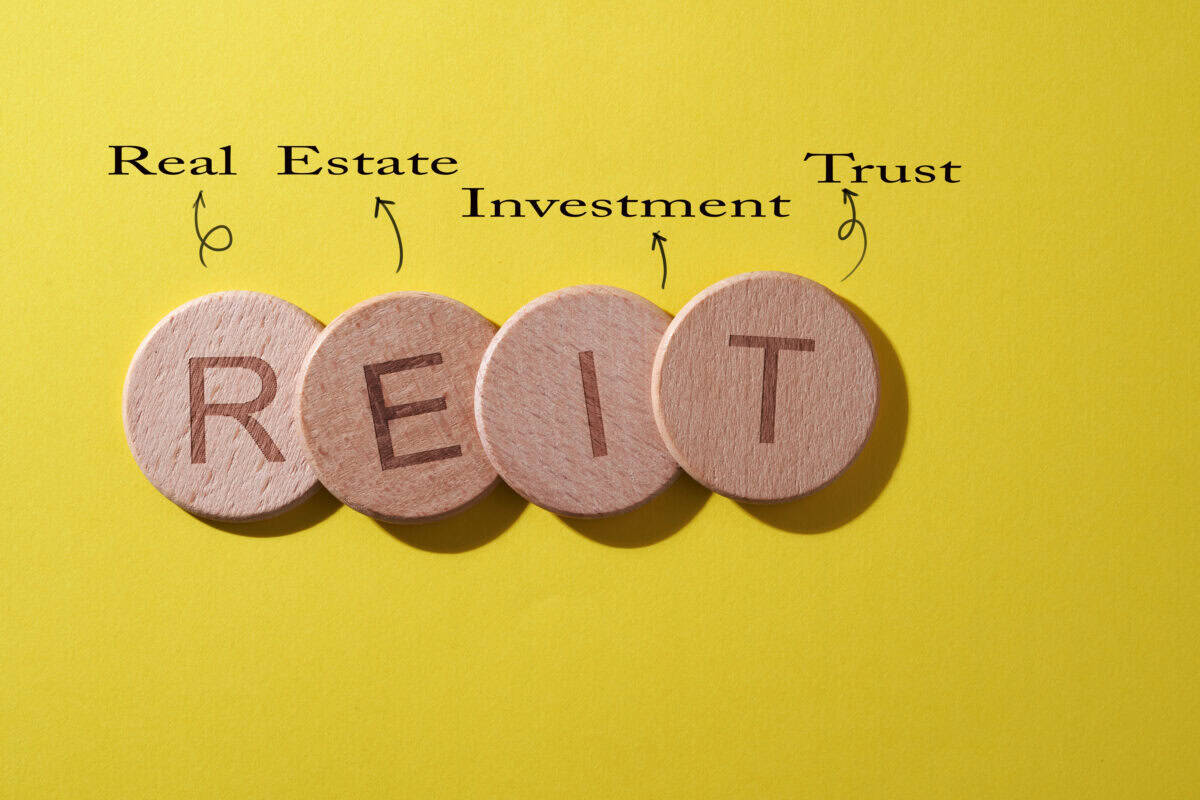
REITs are often associated more with monthly income machines than growth engines. There is a strong reason for this. Their business structure is that of a trust, and a trust cannot retain earnings. The Canada Revenue Agency levies the highest tax rate on retained earnings for a trust. Thus, trusts distribute most of their income to unitholders to retain their tax-free status. But this industrial REIT could help you grow your portfolio using its portfolio value creation and rental income growth.
Source: Getty Images
This industrial REIT could be a quiet growth engine
Granite REIT (TSX: GRT.UN) has 145 industrial properties, including modern warehouses, multipurpose, and special-purpose assets, across six countries in North America and Europe. It disposes of low-yielding properties and acquires properties with better income and occupancy. This helps it grow rental income in addition to renewals and new tenants.
As of July 20, 2026, the REIT has disposed of three income-producing properties for gross proceeds of $158.6 million and has $66.2 million in assets held for sale. It expects to use the sales proceeds, cash on hand, and credit facility to acquire properties worth $195 million. This constant acquisition and disposition of property helps it grow and diversify its portfolio. Granite REIT’s management looks for properties that can create value and generate superior long-term total returns for unitholders.
Moreover, the REIT has an at-the-market (ATM) equity distribution program. Under this program, it raises equity capital to fund property acquisitions, developments, and repay debt. The unit dilution is not significant and gives it flexibility to expand the portfolio.
The increasing fair market value of the property portfolio adds the growth component, and the lease renewals add the income component. In this growth and income strategy, there is a pinch of seasonality.
Granite has significant exposure to e-commerce companies and industries that have storage needs. It earns 25.9% of its revenue from auto components maker Magna International and 3.7% from Amazon. The two tenants bring seasonality, with September and October being weak months and April and May being the peak period. The unit price varies from $80–100 between peaks and troughs. You can use Granite REIT’s seasonality to grow wealth and income.
How to use Granite REIT for growth
Just as Granite revives its property portfolio, disposing of weak-performing properties for better-performing ones, you can rebalance this stock too. Consider investing a larger amount every year in October when the unit price falls to around $80.
For $8,000, you can buy 100 units. Consider retaining 50% of the units for the long term and use the remaining 50% for profit booking and reinvesting. Since you buy 100 units in October, you can sell 50 units at the peak of $100 and get $5,000 in sales proceeds.
Now for the second phase of the strategy, reinvest the same $5,000 to buy more units of Graphite REIT in the October dip at around $80. For $80 a unit, you can buy 62 units, creating a value of 12 income-paying units.
If Granite REIT retains this seasonality, five years of profit booking and reinvesting can grow your unit count to 159 units. Even at the lower range of the unit price, it can convert $8,000 to $12,720.
Why not use this strategy for all 100 units? The real estate market faces risk from increasing interest rates, as it makes portfolio shuffling expensive. The 50 units held in your core portfolio for long-term returns ensure income keeps flowing. Granite REIT grew dividends by 3–5% annually for the last 13 years, and the retained 50 units can produce that income. Buying the dip can help you lock in a 5% dividend yield, which otherwise reduces to 3% during peak season.
Investor takeaway
This strategy is only possible in a Tax-Free Savings Account (TFSA), which allows your investment to grow tax-free. Any capital gains realized, retained, and reinvested in the account are exempt from tax, and so are dividends withdrawn.